
How to Think in French: 10 Tips to Stop Translating in Your Head

Many language learners say they can read and understand French, yet when it comes to speaking — or even thinking — in French, their minds revert to their native language. This constant mental translation slows everything down, kills spontaneity, and makes real-time conversation much harder.
In this article, we share 10 practical tips to help you think in French without translating and explain how to build this habit at any level. The tips are structured by proficiency level: Beginner, Intermediate, and Advanced.
Table of Contents
1. Why Thinking in French Is Backed by Science
How cognitive research shows that thinking directly in a second language improves fluency, decision-making, and reduces mental biases.
2. Beginner Level (A1–A2): Building the Foundations
Tip 1: Label Your Surroundings
Tip 2: Start with Single Words → Short Phrases
Tip 3: Practise Daily Silent French Thinking
Tip 4: Read Short Texts Aloud
3. Intermediate Level (B1–B2): Practise, Automate, Internalize
Tip 5: Describe Everything Around You
Tip 6: Use Immersive Media — Actively
Tip 7: Practise Spontaneous Monologues
4. Advanced Level (B2+–C1+): Think Like a Native Speaker
Tip 8: Immerse Yourself in Complex Content
Tip 9: Use French for Professional, Emotional, and Creative Thinking
Tip 10: Professional, intellectual, and emotional use
1- Why Science Highly Recommends Thinking in French

A growing body of research suggests that fluency isn’t just about mastering vocabulary or grammar, it’s about shifting your internal thought process. Thinking directly in French re‑wires the mind for fluid, spontaneous expression and deeper cognitive benefits.
Researchers argue that beyond the general cognitive benefits of bilingualism, actively thinking in a non-native language can improve reasoning and decision-making — an effect known as the foreign-language effect (FLE). Studies show that using a foreign language can reduce cognitive biases, emotional interference, and framing effects, potentially helping people make more rational choices. Switching to a non-native language could act as a “nudge” to support better decision-making, personal well-being, and even public policy outcomes such as sustainable behaviour.
2- Beginner Level (A1–A2 / early A2+): Laying the Groundwork

At the elementary stage, thinking in French can feel overwhelming, but starting small and consistent is key.
Tip 1: Label your surroundings
Attach sticky-notes on objects around your home with French words (table → table, chair → chaise). This “micro-immersion” technique helps your brain form direct associations (TalkPal).
Tip 2: Think single words, then short phrases
Start with objects, actions, or feelings in French. Combine them gradually into simple phrases (“bread – coffee – cheese” → Je prends un café). This gradual approach reduces mental overload
Tip 3: Daily silent French practice
Spend 5–10 minutes mentally describing what you see or do. Even simple phrases strengthen neural pathways for French thinking.
Tip 4: Read short French texts aloud
Reading aloud engages visual, auditory, and vocal areas, helping the brain internalize rhythm, sentence structure, and pronunciation.
3- Intermediate Level (B1–B2): Practise, Automate, Internalize

Intermediate learners often understand more than they can produce; thinking in French reduces hesitation.
Tip 5: Mental observation everywhere
Describe surroundings, weather, people, and feelings in French as a daily habit. Strengthens spontaneous French thinking. At this stage, let your thoughts and observations come freely without worrying too much about grammar mistakes. The primary goal is not to speak without errors, but to create a spontaneous flow in French.
You can also narrate your day in French mentally (or quietly aloud) summarize daily activities: “This morning I had coffee, I went to work…” Builds automatic internal dialogue and reinforces fluency.
Tip 6: Immersive media but actively
Consuming French media whether news, series, podcasts, films, or YouTube channels is one of the most effective and scientifically supported ways to start thinking in French. However, research makes one point very clear: immersion only works when it is active, not passive.
Linguists and cognitive scientists agree that active immersion dramatically accelerates language acquisition. It helps the brain develop automaticity, meaning it begins to process French without translating from English. Studies on second-language acquisition also show that exposure to rich, meaningful content supports comprehensible input, allowing learners to naturally internalize grammatical structures.
Immersive media improves pronunciation and prosody by training the ear to recognize authentic rhythms and intonations. It also strengthens predictive processing, a key component of fluency that helps speakers anticipate upcoming words and structures. Finally, encountering words repeatedly in varied contexts boosts vocabulary retention, making learning more durable than memorizing isolated lists.
Tip 7: Spontaneous monologues
The direct method of teaching, which is sometimes called the natural method, and is often (but not exclusively) used in teaching foreign languages, refrains from using the learners' native language and uses only the target language. Speak or think for 5 minutes in French about any topic. This simulates conversation, reduces reliance on translation, and increases spontaneity.
4- Advanced Level (B2+ / C1+): Think Like a Native
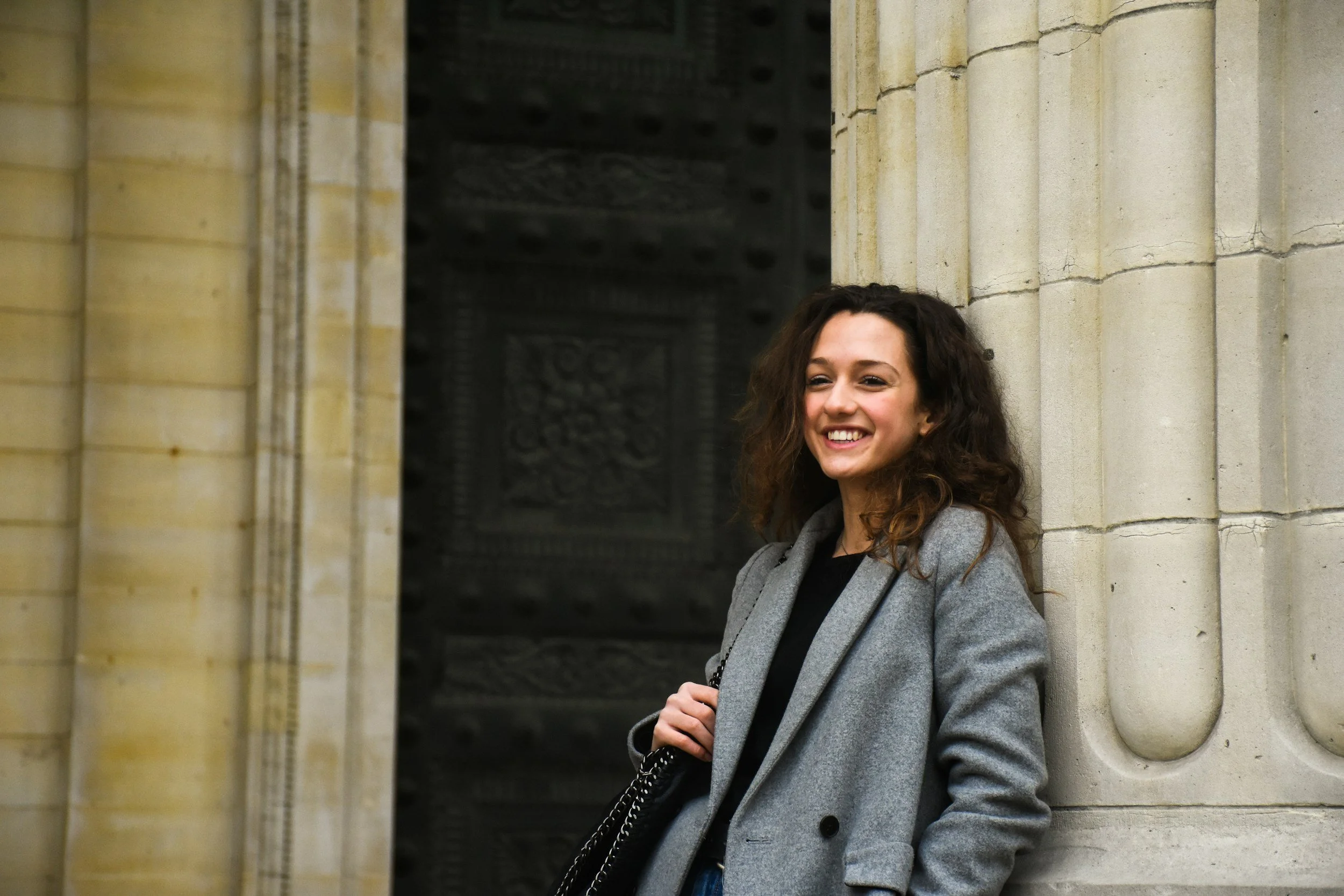
At advanced levels, the goal is natural, intuitive French thought.
Tip 9: Complex content immersion
Once you reach an advanced level, immersing yourself in complex French content—literature, editorials, long-form journalism, academic essays, or even creative writing—can dramatically accelerate your ability to think in French. At this stage, the goal is not perfect understanding. Instead, you learn to tolerate ambiguity, make educated guesses about meaning, and revisit passages to gradually refine comprehension. This shift trains the brain to process French more holistically.
Tip 10: Professional, intellectual, and emotional use
Use French for journaling, work, or creative writing. Treat French as a cognitive tool, not just a classroom subject.
Private French lessons online or in person in Paris with French à La Carte
At French à La Carte, we offer personalized and structured private French lessons. Grammar structures, syntax, tenses, feel free to contact us to learn more about the grammar points to focus on on according to your level ( A1,A2,B1,B2,C1)
If, you would like to practise with a French tutor, we can help you with private personalized lessons online or in person in Paris.
We offer
Conversational French
French for professionals
Lessons in the evening & on the week-ends
Immersive lessons in Paris
Exam preparation ( TCF, DELF, DALF)