How to Remember French Vocabulary: 10 Effective Techniques That Really Work

AI-generated illustration
Wondering how to remember French vocabulary without spending hours memorizing endless word lists? The key is to learn new words in context, review them regularly, and use them in everyday conversations.
Whether you are a beginner or an advanced learner, these 10 practical techniques will help you expand your French vocabulary, remember tricky verbs and expressions, and speak French with greater confidence.
Why Is French Vocabulary So Difficult to Remember?

French has its fair share of challenges: grammatical genders, irregular verbs, silent letters, and expressions that don't translate word for word.
Take Tu me manques (I miss you) or avoir envie de (to feel like doing something). Their structures aren't immediately intuitive to English speakers.
But the biggest challenge is often the gap between recognizing a word and being able to use it spontaneously. You might understand se débrouiller (to manage or cope) when someone says it, yet struggle to retrieve it during a conversation.
The goal is simple: to turn words you recognize into words you can actually use.
10 Effective Ways to Memorize French Vocabulary
1. Learn French Words in Context, Not in Isolation
A French word can have several meanings depending on how it's used.
Take compte, for example:
Se rendre compte de — To realize
Tenir compte de — To take into account
Régler son compte à quelqu'un — To settle a score with someone
Rather than memorizing isolated words, learn complete expressions and short sentences. You will understand not only what a word means but also how French speakers use it.
2. Use Spaced Repetition to Make Vocabulary Stick
Ever memorized twenty French words only to forget most of them a few days later?
Spaced repetition can help. Instead of reviewing everything in one sitting, revisit new vocabulary at gradually increasing intervals: the next day, a few days later, then a week later.
Words you find difficult need more frequent attention, while familiar ones can be reviewed less often. This technique is particularly effective for irregular verbs, grammatical structures, and idiomatic expressions.
3 . Use Apps to Memorize French Vocabulary and Verbs
Learning French vocabulary doesn't have to mean spending hours with textbooks and conjugation tables. Language-learning apps can make the process more engaging, interactive, and easier to fit into a busy schedule.
Many apps offer flashcards, pronunciation exercises, verb conjugation practice, and spaced repetition techniques to help new words stick.
Here are some useful apps to help you memorize French vocabulary and verbs:
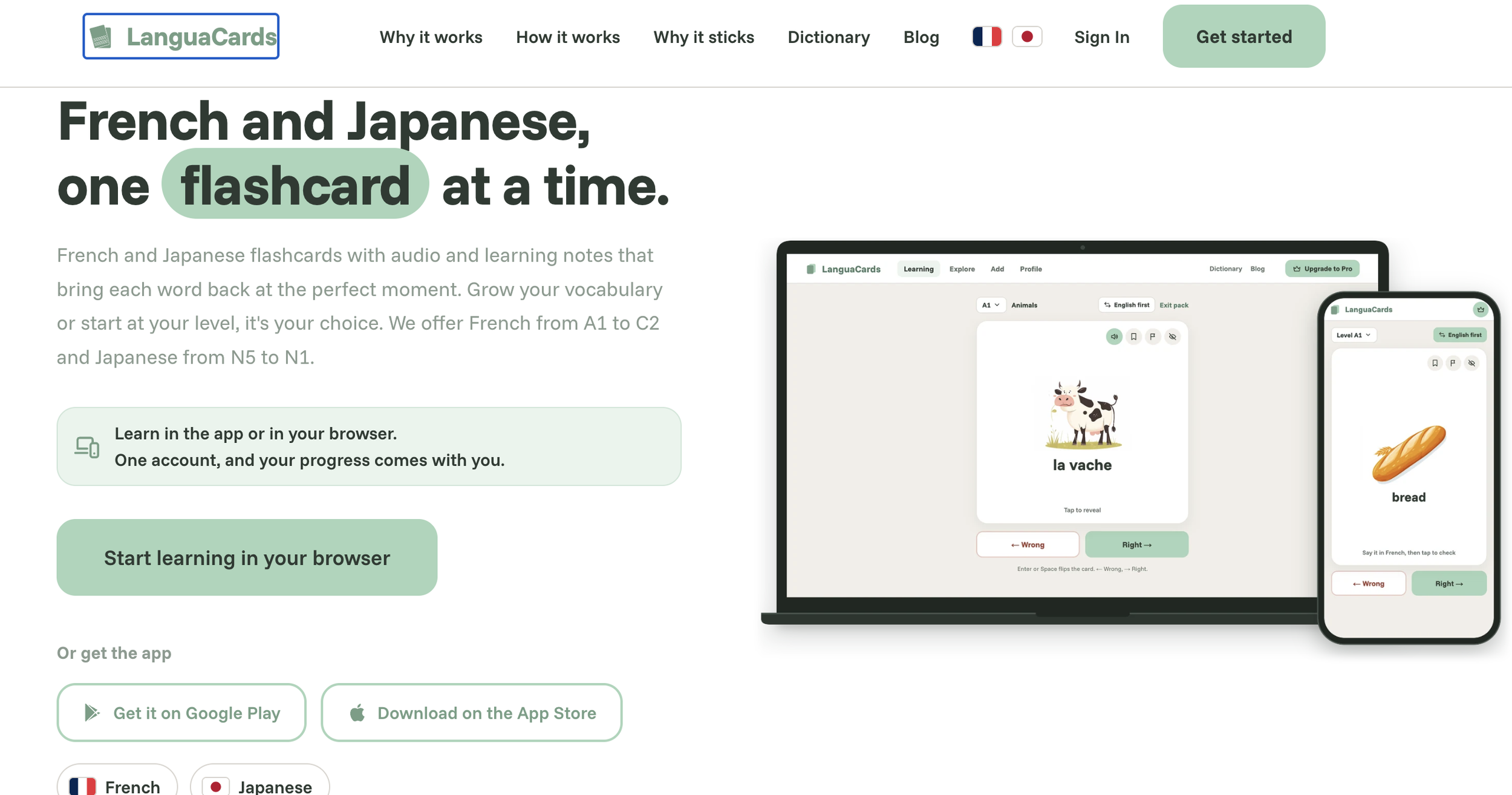
LanguaCards is a French vocabulary flashcard app with 6,000+ words and phrases from A1 to C2, each with audio. Its reviews bring every word back just before you would forget it, so new vocabulary sticks without you having to build your own decks. It is available on iOS, Android and the web at languacards.io.
Quizlet is a popular learning app that helps you memorize French vocabulary through digital flashcards, practice tests, and interactive activities. You can create your own vocabulary sets or explore those shared by other learners and teachers. It's a convenient way to review new words, test your knowledge, and make vocabulary practice more engaging, whether you're studying at home or on the go.
4. Create Flashcards with Useful French Expressions
AI-generated illustration
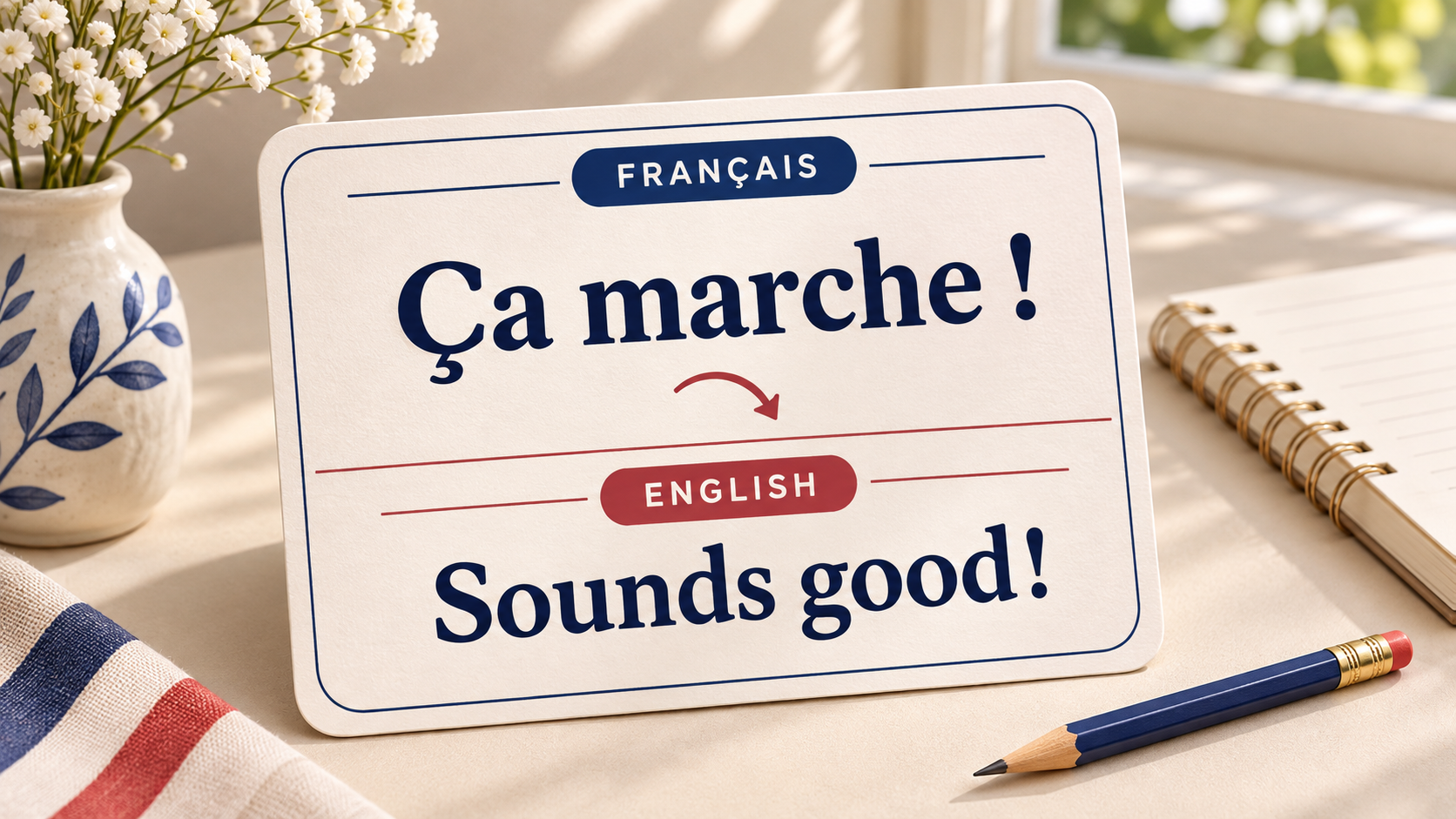
Flashcards are an excellent way to test your memory, especially when they encourage you to recall information rather than simply recognize it.
But make them practical. Instead of writing prendre = to take, learn prendre une décision = to make a decision and all the other expressions with verb prendre.
Digital flashcards can make daily revision easier, particularly when combined with spaced repetition.
5. Connect Vocabulary to Images and Personal Experiences

AI-generated illustration
Words associated with real experiences are often easier to remember.
Perhaps you learned the expression faire de la randonnée (to go hiking) while exploring the French countryside or planning a hike with friends.
Neuroscience helps explain why this approach works. The hippocampus, a brain region involved in forming new memories, helps connect information with its context, including places, images, and experiences. When you associate a French word with a meaningful personal experience, you create additional memory cues that can make it easier to recall later.
Try creating similar associations when studying. Use photographs, imagine familiar situations, or link new vocabulary to activities you enjoy.
The more personal and meaningful the connection, the easier it becomes to remember and use the vocabulary naturally.
6. Learn French Verbs Through Everyday Sentences

AI-generated illustration
French conjugation can feel like an uphill battle, especially with irregular verbs.
Rather than memorizing endless conjugation tables, practise verbs through sentences you might actually use.
For example, with faire:
Je fais du yoga deux fois par semaine.
J'ai fait les courses ce matin.
If you need a little extra practice, apps can help you master French verb conjugations through short, interactive exercises. Conjuu is worth exploring. This app focuses specifically on French verbs, with over 600 common verbs, interactive exercises, pronunciation guides, and French-English translations. You can practice different tenses, including irregular verbs, and the app gives you extra practice with the conjugations you find most difficult. It's a useful way to build confidence with French verbs through regular, targeted practice.
7. Organize French Vocabulary by Theme
AI-generated illustration
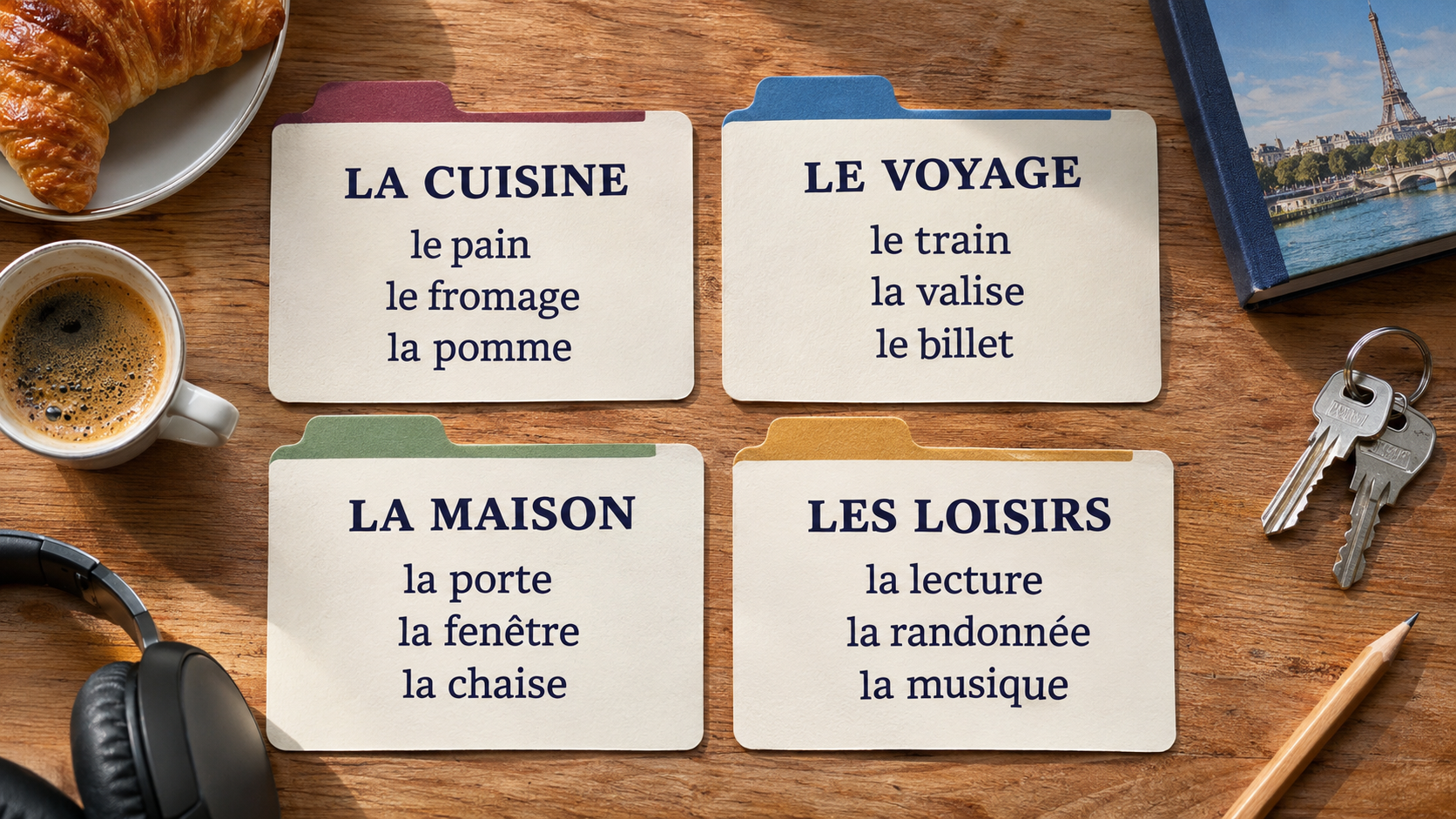
Learning words by theme helps you build connections and prepare for real conversations.
For example:
At a café: une terrasse, commander, l'addition, une carafe d'eau, à emporter.
At work: une réunion, un délai, reporter un rendez-vous, faire le point.
Expressing opinions: à mon avis, pourtant, en revanche, remettre en question.
Once you have learned a group of expressions, try creating a short dialogue or describing a personal experience using them.
8. Listen to French and Repeat Words Aloud
French pronunciation doesn't always match written French. Silent letters, liaisons, and connected speech can make familiar words difficult to recognize. Choose a short podcast, interview, or video suited to your level. Listen for general understanding, then replay a passage and repeat a few useful expressions.
9. Use New Vocabulary in Real Conversations
This is where the rubber meets the road. You might know dozens of French expressions but still struggle to retrieve them when speaking.
Conversation practice helps turn passive knowledge into active communication. During a French lesson, try deliberately using five new expressions while discussing your weekend, work, or current events.
For example, use avoir hâte de to describe an upcoming trip or se rendre compte de to explain something you've recently realized.
10. Build a 10-Minute Daily Revision Routine
Consistency is often more valuable than occasional marathon study sessions.
A simple daily routine could look like this:
3 minutes: Review previously learned vocabulary.
3 minutes: Learn three to five new expressions.
2 minutes: Create personal sentences.
2 minutes: Say them aloud without looking at your notes.
Learn French with French à La Carte

Private French lessons Paris French à La Carte
French à La Carte is specialized in one on one lessons in Paris and online.
We offer tailor-made French lessons with highly qualified native French tutors.
Find all our grammar articles on our blog.
If you are looking for :
Conversational French
French for professionals
Lessons in the evening & on the week-ends
Immersive lessons in Paris
Exam preparation ( TCF, DELF, DALF)