French Protest Vocabulary: Understanding France's Culture of Demonstrations
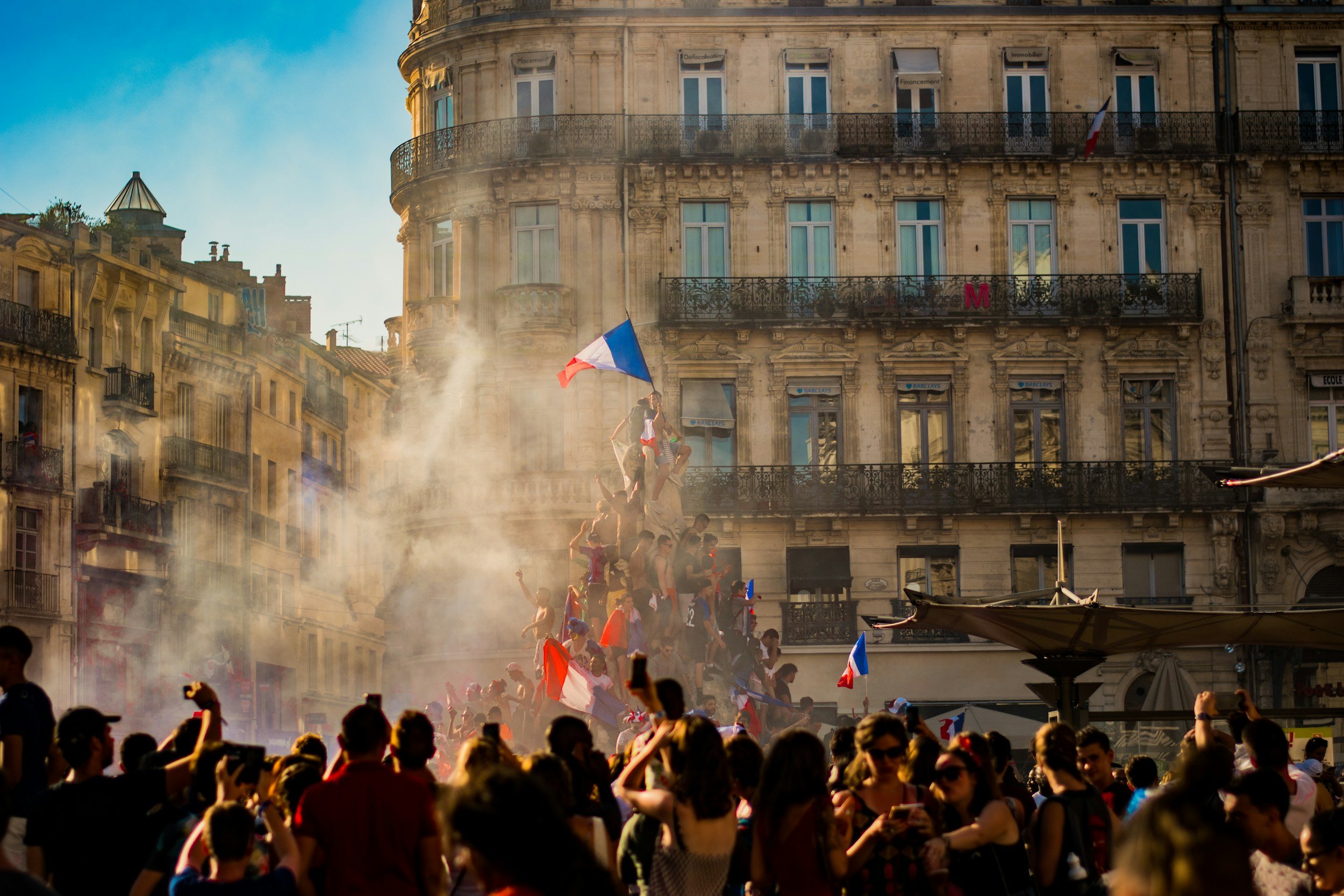
Protests and strikes are part of everyday life in France, but do you know how to talk about them in French? From the French Revolution to May 1968 and the demonstrations of October 17, 2026, discover the history behind France's strong culture of protest while learning essential French protest vocabulary.
Designed for A2/B1 French learners, this bilingual French-English article will help you understand common words and expressions used in French news and everyday conversations. You'll also find a practical vocabulary list with English translations and a fill-in-the-blank exercise to test your knowledge.
1. A Long Tradition of Protest
FR — En France, manifester est une tradition très ancienne. Dès le Moyen Âge, les populations se révoltent contre les impôts et le pouvoir du roi. En 1358, pendant la Grande Jacquerie, des paysans se soulèvent contre les nobles. À cette époque, il ne s'agit pas encore de manifestations comme aujourd'hui, mais les Français expriment déjà leur colère contre le pouvoir.
Le droit de grève a été reconnu dès 1864, sous Napoléon III, avec la loi Ollivier qui autorise les grèves sous certaines conditions. En 1946, ce droit devient un droit fondamental inscrit dans le Préambule de la Constitution.
EN — In France, protesting is a very old tradition. As early as the Middle Ages, people rebelled against taxes and royal power. In 1358, during the Great Jacquerie, peasants rose up against the nobility. These were not demonstrations as we know them today, but people were already expressing their anger against those in power.
The right to strike was first recognized in 1864, under Napoleon III, with the Ollivier Law, which allowed strikes under certain conditions. In 1946, this right became a fundamental right enshrined in the Preamble to the Constitution.
2. From the French Revolution to Paid Vacation
AI generated
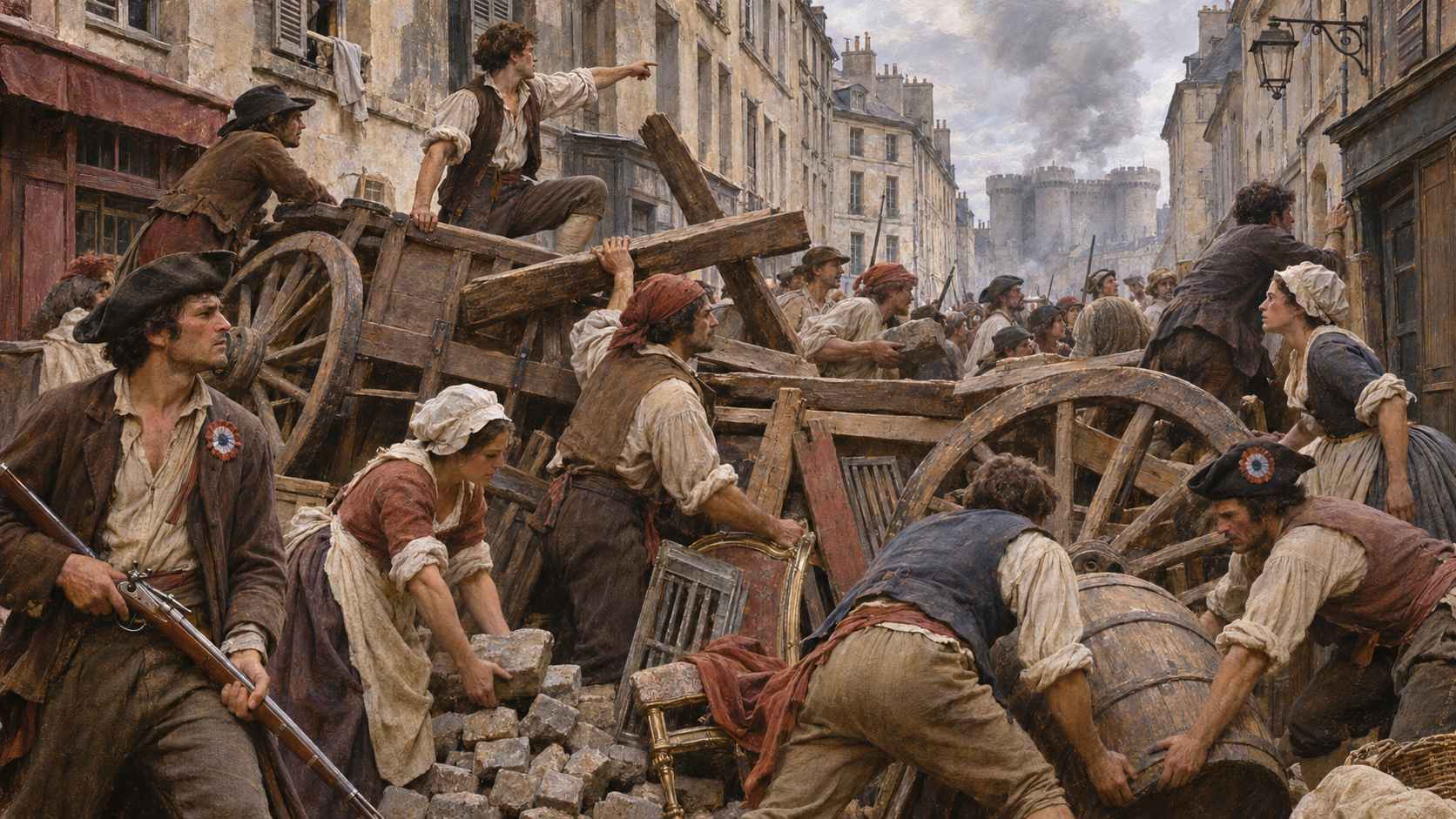
FR — En 1789, pendant la Révolution française, le peuple parisien descend dans la rue et prend la Bastille, symbole du pouvoir royal. Au XIXe siècle, les Parisiens construisent des barricades pendant les révolutions de 1830 et de 1848. Plus tard, en 1936, de grandes grèves aboutissent à l’obtention de deux semaines de congés payés pour les travailleurs.
EN — In 1789, during the French Revolution, Parisians took to the streets and stormed the Bastille, a symbol of royal power. During the 19th century, Parisians built barricades during the revolutions of 1830 and 1848. Later, in 1936, major strikes led to workers gaining two weeks of paid leave.
3. May 1968: Students Take to the Streets
AI generated
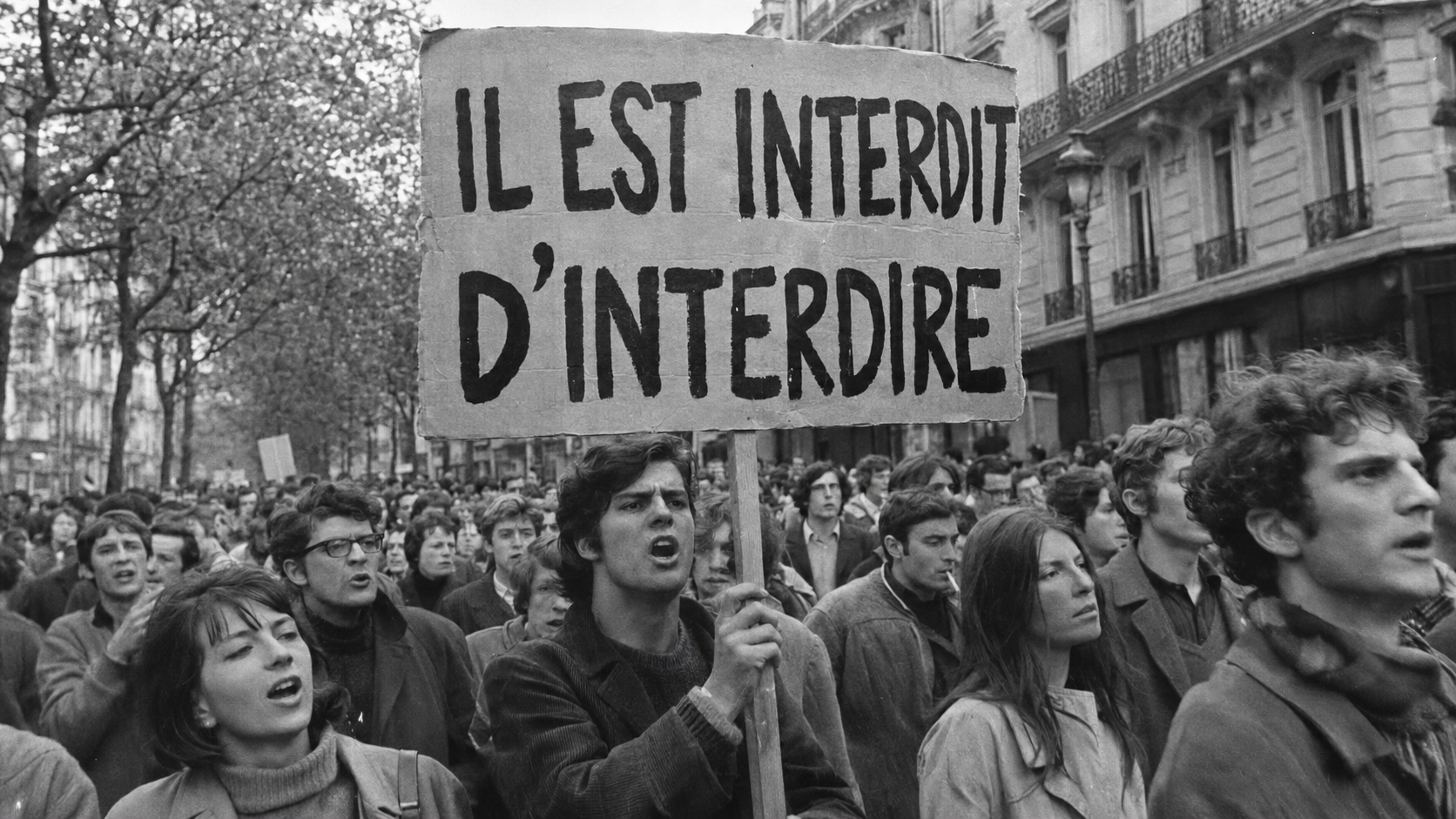
FR — En mai 1968, les étudiants manifestent contre les règles strictes de l'université et contestent une société qu'ils jugent trop autoritaire et conservatrice. Très vite, les ouvriers rejoignent le mouvement et des millions de Français font grève. À Paris, les manifestants construisent des barricades et affrontent la police. Des slogans comme « Il est interdit d'interdire » deviennent célèbres. Mai 68 marque profondément la société française.
EN — In May 1968, students protest against strict university rules and challenge a society they consider too authoritarian and conservative. Workers quickly joined the movement, and millions of French people went on strike. In Paris, protesters built barricades and clashed with the police. Slogans such as "It is forbidden to forbid" became famous. May 1968 had a lasting impact on French society.
4. Why Do the French Protest So Often?
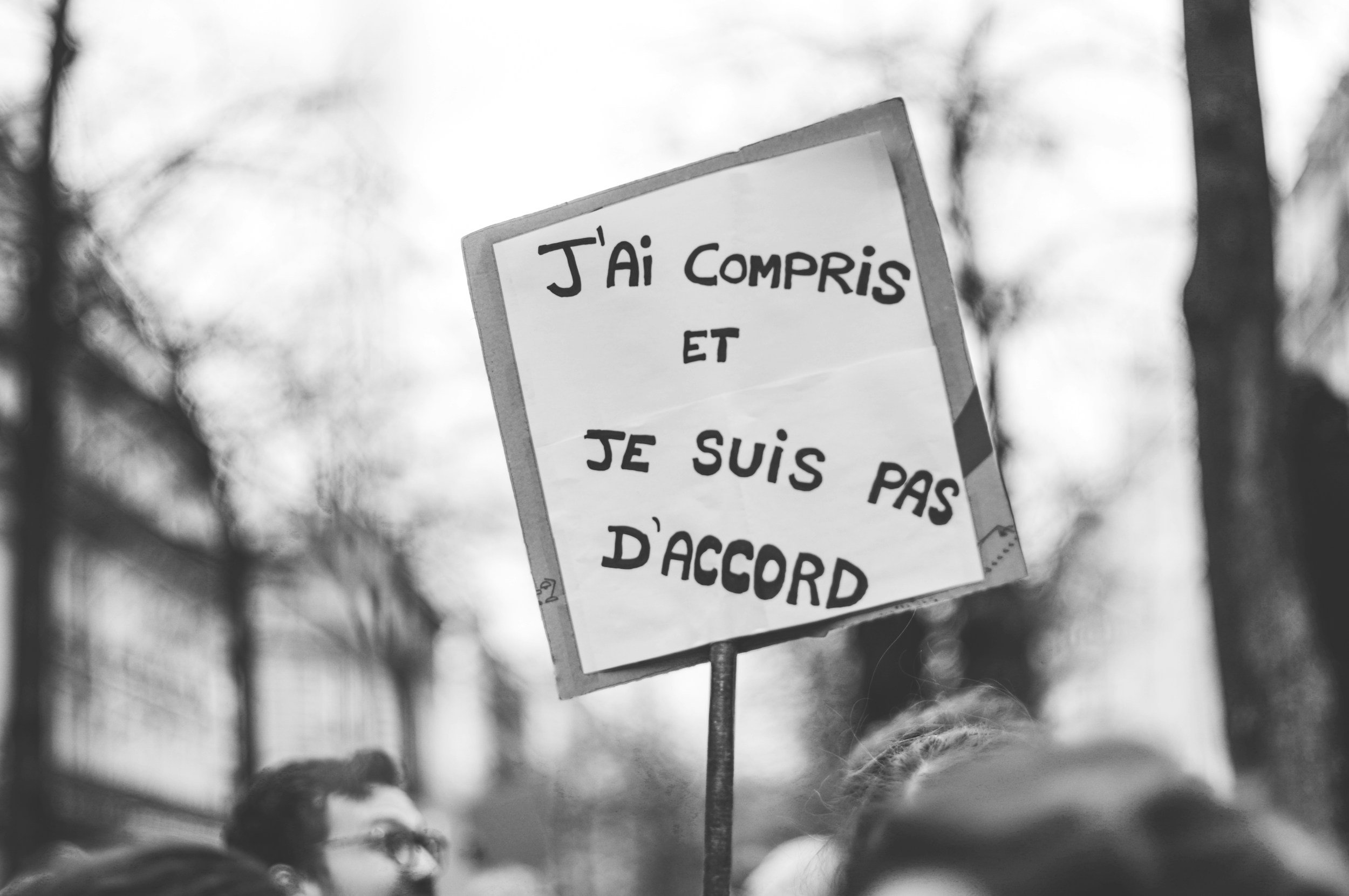
FR — Les Français sont connus pour manifester régulièrement. Quand une partie de la population n'est pas d'accord avec une loi ou une réforme, elle descend dans la rue. Les syndicats organisent des manifestations et appellent très souvent à la grève.
Les transports peuvent alors être bloqués : trains annulés, métros à l'arrêt, circulation difficile. Les Français acceptent ces problèmes avec plus ou moins de patience car leur quotidien devient très compliqué et tous ne partagent pas les revendications.
EN — The French are known for protesting regularly. When part of the population disagrees with a law or reform, people takes to the streets. Trade unions organize demonstrations and often call for strikes.
Public transportation may be disrupted: canceled trains, suspended metro services, and traffic problems. The French put up with these disruptions with varying degrees of patience, as their daily lives become increasingly complicated, and not everyone supports the protesters’ demands.
5. October 17, 2026: A Protest That Turns Violent
FR — Le 17 octobre 2026, des milliers de Français manifestent contre la vie chère. Les lycéens eux manifestent notamment pour dénoncer le manque de professeurs et leurs absences non remplacées, ainsi que l'état dégradé de certains établissements scolaires. Ils réclament également davantage de transparence dans les critères de sélection à l'entrée de l'université.
Une grande partie des cortèges manifeste calmement mais dans plusieurs villes, dont Paris, Lyon et Marseille, la situation dégénère.
Des vitrines sont cassées, des magasins sont pillés et des véhicules sont incendiés. À Paris, 451 commerces sont touchés pendant le week-end, dont 228 pillés.
EN — On October 17, 2026, thousands of French people protested against the rising cost of living.
High school students, meanwhile, protested against teacher shortages, the lack of substitute teachers to cover absences, and the poor condition of some school buildings. They also called for greater transparency in university admissions criteria.
A large proportion of the demonstrators protest peacefully but In several cities, including Paris, Lyon, and Marseille, the situation turned violent.
Shop windows were smashed, stores were looted, and vehicles were set on fire. In Paris, 451 businesses were affected over the weekend, including 228 that were looted.
6. Who Are the Vandals, Looters, and Black Blocs?
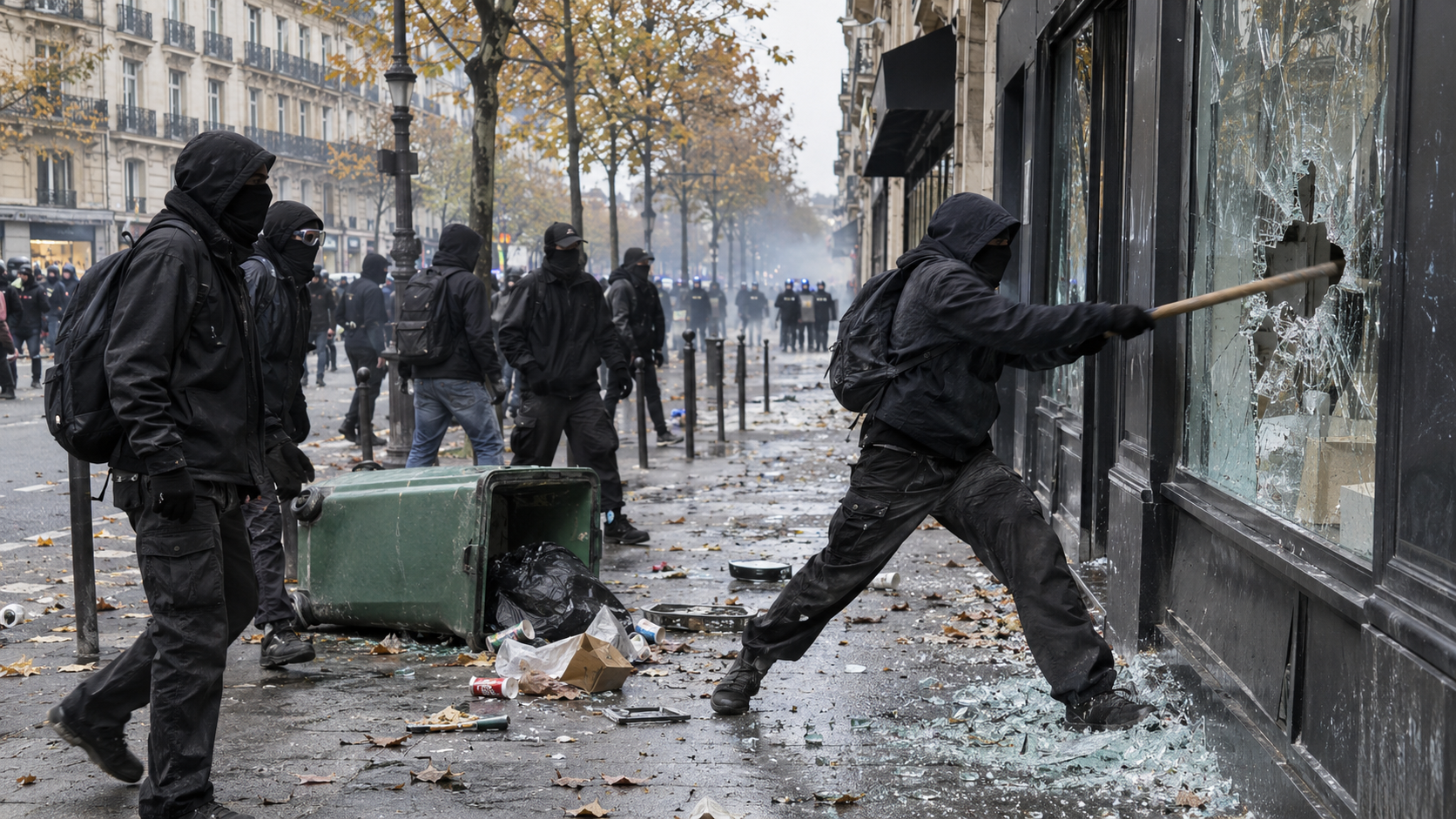
AI generated
FR — Les casseurs détruisent des vitrines ou du mobilier urbain. Les pilleurs entrent dans les magasins pour voler des produits. Les Black Blocs sont des groupes de manifestants habillés en noir et souvent masqués.
Généralement proches des mouvements anarchistes et anticapitalistes, ils dénoncent les inégalités sociales, le système capitaliste et les violences policières. Certains affrontent la police et participent à des destructions. Il faut distinguer ces violences des manifestations pacifiques.
EN — Rioters vandalize shop windows or public property. Looters enter shops to steal goods. Black Blocs are groups of protesters dressed in black, often wearing masks.
Generally associated with anarchist and anti-capitalist movements, they denounce social inequalities, the capitalist system, and police violence. Some clash with the police and engage in acts of vandalism. It is important to distinguish this violence from peaceful protests.
Essential French Protest Vocabulary
Nouns
Une manifestation — a demonstration / protest
Un manifestant / une manifestante — a protester
Une grève — a strike
Un syndicat — a trade union
Une réforme — a reform
Une barricade — a barricade
Un slogan — a slogan / chant
Un casseur / une casseuse — a vandal / violent rioter
Un pilleur / une pilleuse — a looter
Une vitrine — a shop window
Les dégâts — damage
Les forces de l'ordre — law enforcement
Verbs
Manifester — to protest / demonstrate
Descendre dans la rue — to take to the streets
Se révolter — to rebel
Faire grève — to go on strike
Bloquer — to block
Affronter — to clash with / confront
Dégénérer — to get out of hand
Piller — to loot
Incendier — to set fire to
Adjectives
Pacifique — peaceful
Mécontent(e) — dissatisfied / unhappy
Useful French Expressions
Être en désaccord avec — to disagree with
Faire entendre sa voix — to make one's voice heard
La situation dégénère — the situation gets out of hand
Appeler à la grève — to call for a strike
B1 French Exercise: Complete the Sentences

Complete the sentences using the words provided. Each word is used only once.
Mots à utiliser :
manifestants – grève – syndicats – barricades – bloqués – pillé – casseurs – vitrines – dégénéré – pacifique
Des milliers de __________ défilent dans les rues de Paris.
Les cheminots ont décidé de faire __________.
Les __________ organisent une manifestation contre la réforme.
En mai 1968, les étudiants construisent des __________.
Pendant la manifestation, plusieurs accès au métro sont __________.
Un magasin a été __________ pendant les violences.
Les __________ ont détruit plusieurs voitures.
Les commerçants doivent remplacer leurs __________ cassées.
La situation a __________ après les premiers affrontements.
Une manifestation __________ se déroule sans violence.
Answers
manifestants
grève
syndicats
barricades
bloqués
pillé
casseurs
vitrines
dégénéré
Learn French with French à La Carte

French à La Carte is specialized in one on one lessons in Paris and online.
We offer tailor-made French lessons with highly qualified native French tutors.
Find all our grammar articles on our blog.
If you are looking for :
Conversational French
French for professionals
Lessons in the evening & on the week-ends
Immersive lessons in Paris
Exam preparation ( TCF, DELF, DALF)