French Pastry Vocabulary: From Macarons to Christmas Desserts
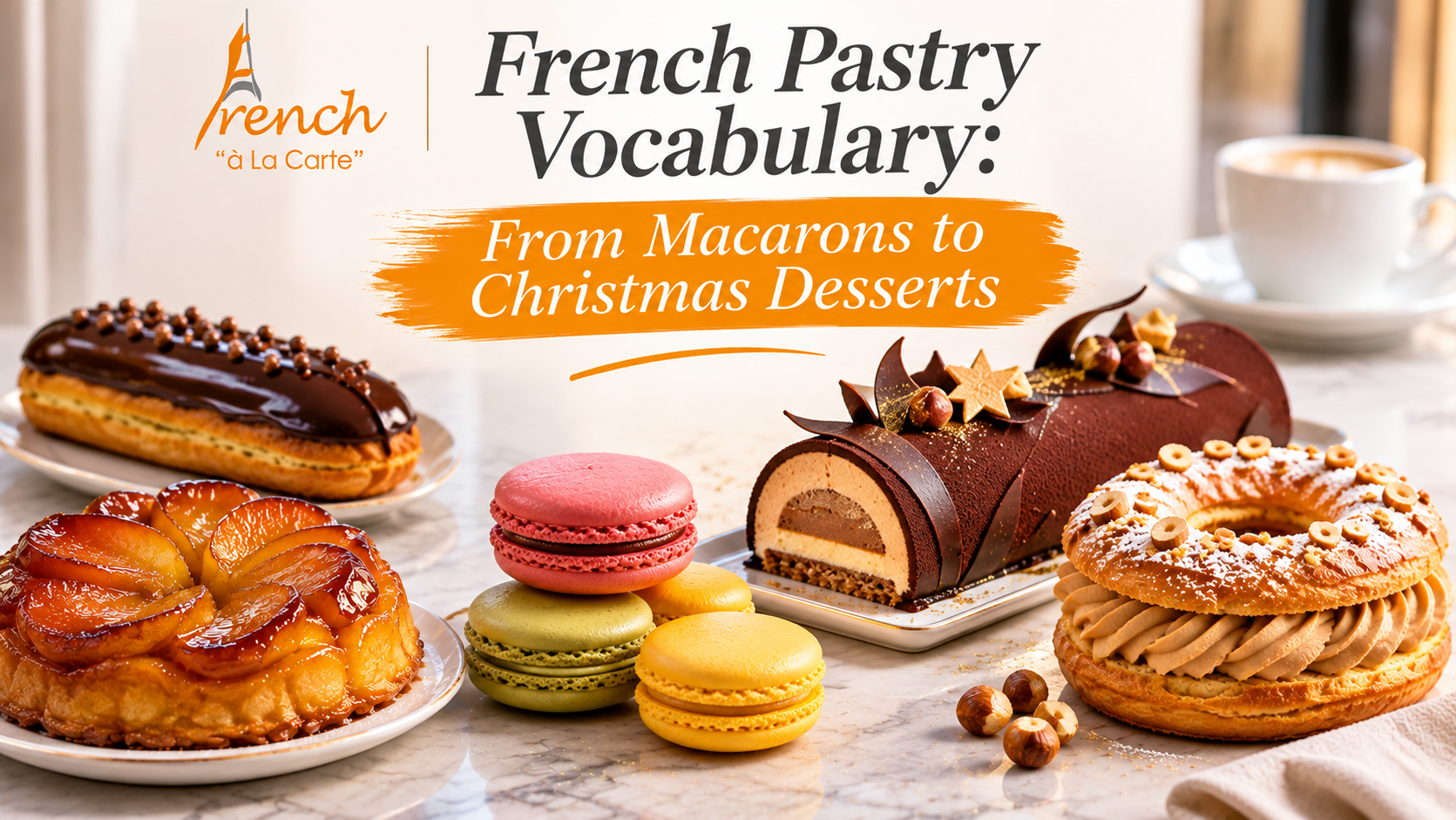
French pastry IA generated
French pastry vocabulary opens the door to one of France's most delicious traditions, from classic éclairs and macarons to spectacular Christmas desserts. But French pâtisserie is much more than a collection of sweet treats: it's an art form shaped by centuries of tradition, creativity, and craftsmanship.
Discover essential French words for ingredients, flavors, and textures, explore iconic French desserts and today's pastry trends, and learn the story behind the famous bûche de Noël.
1. Traditional French Pastries: The Classics You Should Know
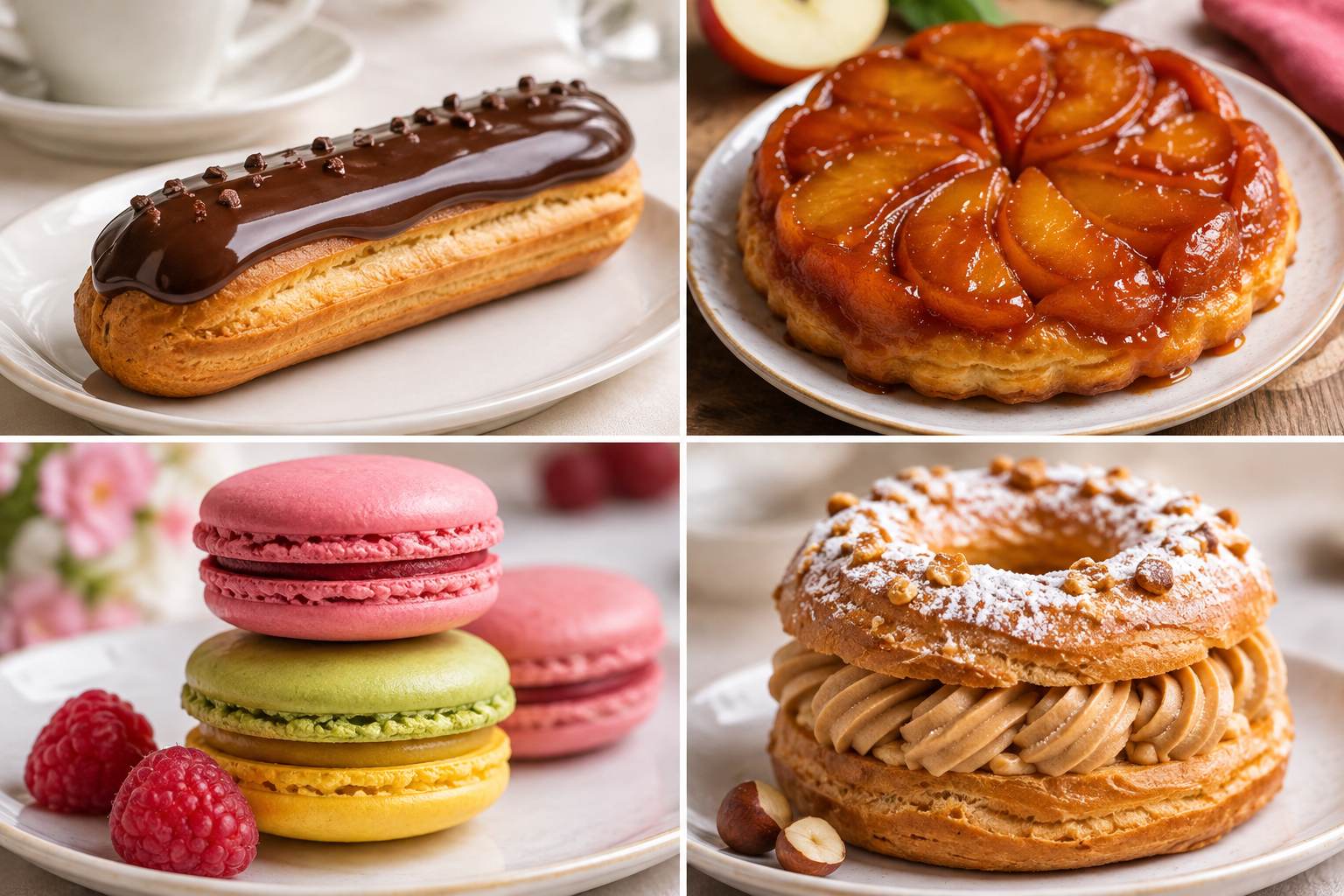
Traditional French pastries - IA generated
France has an extraordinary variety of pastries, many with fascinating stories behind them. In the nineteenth century, legendary pastry chef Marie-Antoine Carême helped transform French pâtisserie into a culinary art, creating spectacular architectural desserts for European royalty and aristocrats. This period also saw the rise of iconic creations such as the Saint-Honoré (1847), the millefeuille in its modern form, and the éclair, which became popular during the nineteenth century. Later, in 1910, the famous Paris-Brest was created to celebrate the Paris–Brest–Paris cycling race.
Here are some iconic traditional French pastries worth discovering.
Un éclair — An elongated choux pastry filled with cream, traditionally chocolate or coffee flavored, and topped with icing.
Un millefeuille — Layers of crisp puff pastry alternating with pastry cream, often finished with icing.
Un Paris-Brest — A ring-shaped choux pastry filled with rich praline cream, created in 1910 to celebrate the Paris–Brest–Paris cycling race.
Une tarte Tatin — An upside-down caramelized apple tart, traditionally associated with the Tatin sisters.
Un Saint-Honoré — A sophisticated cake combining puff pastry, cream, and caramel-coated choux pastries.
Un opéra — A layered cake made with almond sponge, coffee buttercream, and chocolate ganache.
Une religieuse — Two cream-filled choux pastries stacked together, usually covered in chocolate or coffee icing.
Un macaron — A delicate almond-based sandwich cookie with a filling such as ganache, buttercream, or fruit jam.
2. French Pastry Ingredients: Essential Vocabulary
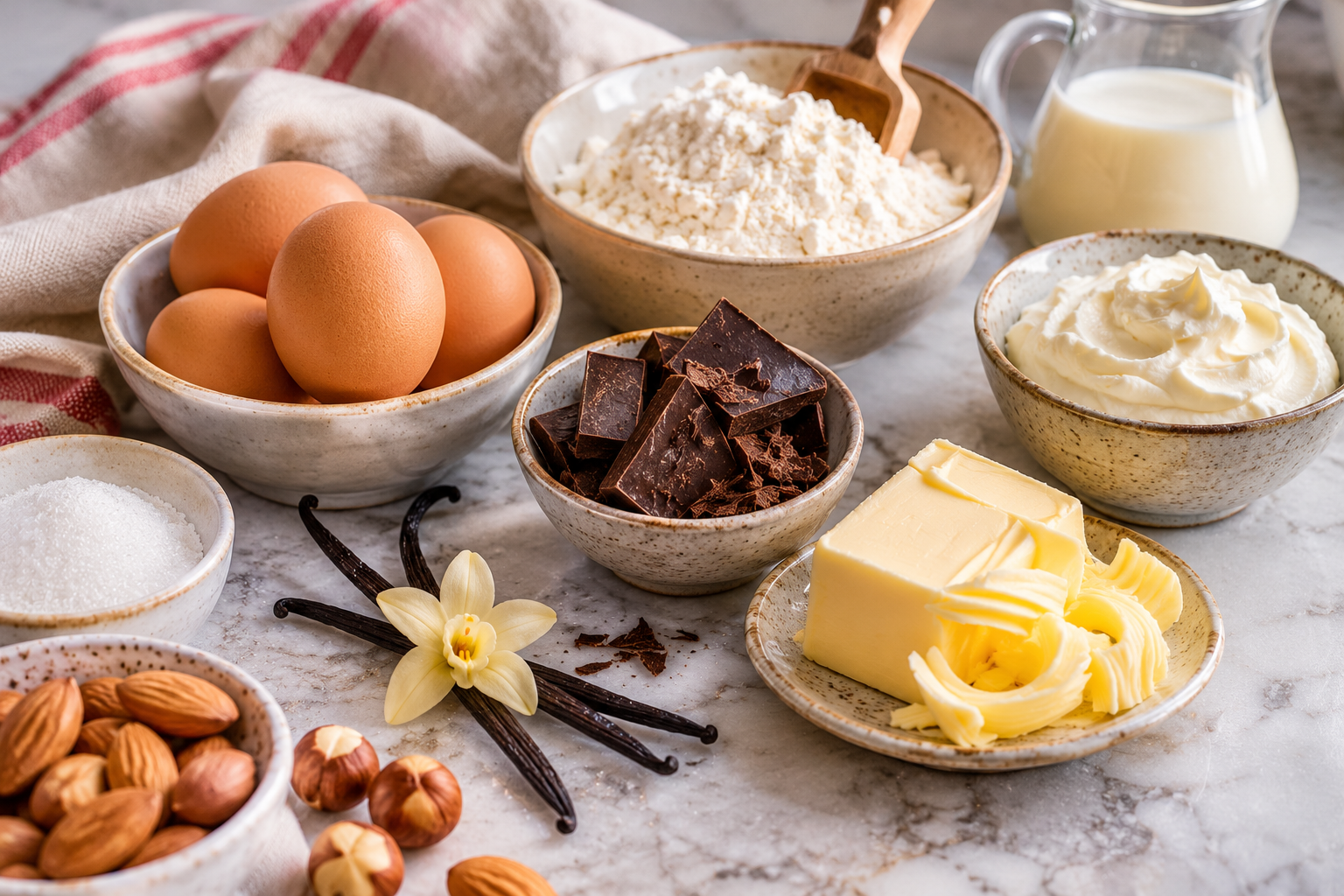
IA generated
To understand a recipe or describe a dessert, it helps to know the basic ingredients used by French pastry chefs.
La farine — Flour
Le beurre — Butter
Le sucre — Sugar
Le sucre glace — Powdered sugar
Les œufs — Eggs
Le lait — Milk
La crème fraîche — Crème fraîche / cultured cream
La crème liquide — Liquid cream / heavy cream, depending on the recipe
Le chocolat noir — Dark chocolate
La vanille — Vanilla
Les amandes — Almonds
Les noisettes — Hazelnuts
La levure chimique — Baking powder
La levure de boulanger — Baker's yeast
Essential French Pastry Preparations
French pastry also relies on several fundamental preparations.
La pâte feuilletée (puff pastry) is made by repeatedly folding butter into dough to create delicate, flaky layers. It is used in millefeuilles and many tarts.
La pâte à choux (choux pastry) is the light dough used for éclairs, profiteroles, and religieuses.
La crème pâtissière (pastry cream) is a thick custard typically made with milk, eggs, sugar, and starch. It is used to fill numerous pastries.
La ganache is a smooth mixture of chocolate and cream, frequently used in cakes, macarons, and chocolate desserts.
Le praliné is a preparation made from caramelized nuts, usually hazelnuts or almonds, ground into a paste.
A useful distinction: une pâtisserie can mean both a pastry and a pastry shop, depending on the context.
3. How to Describe Flavors and Textures in French
IA generated
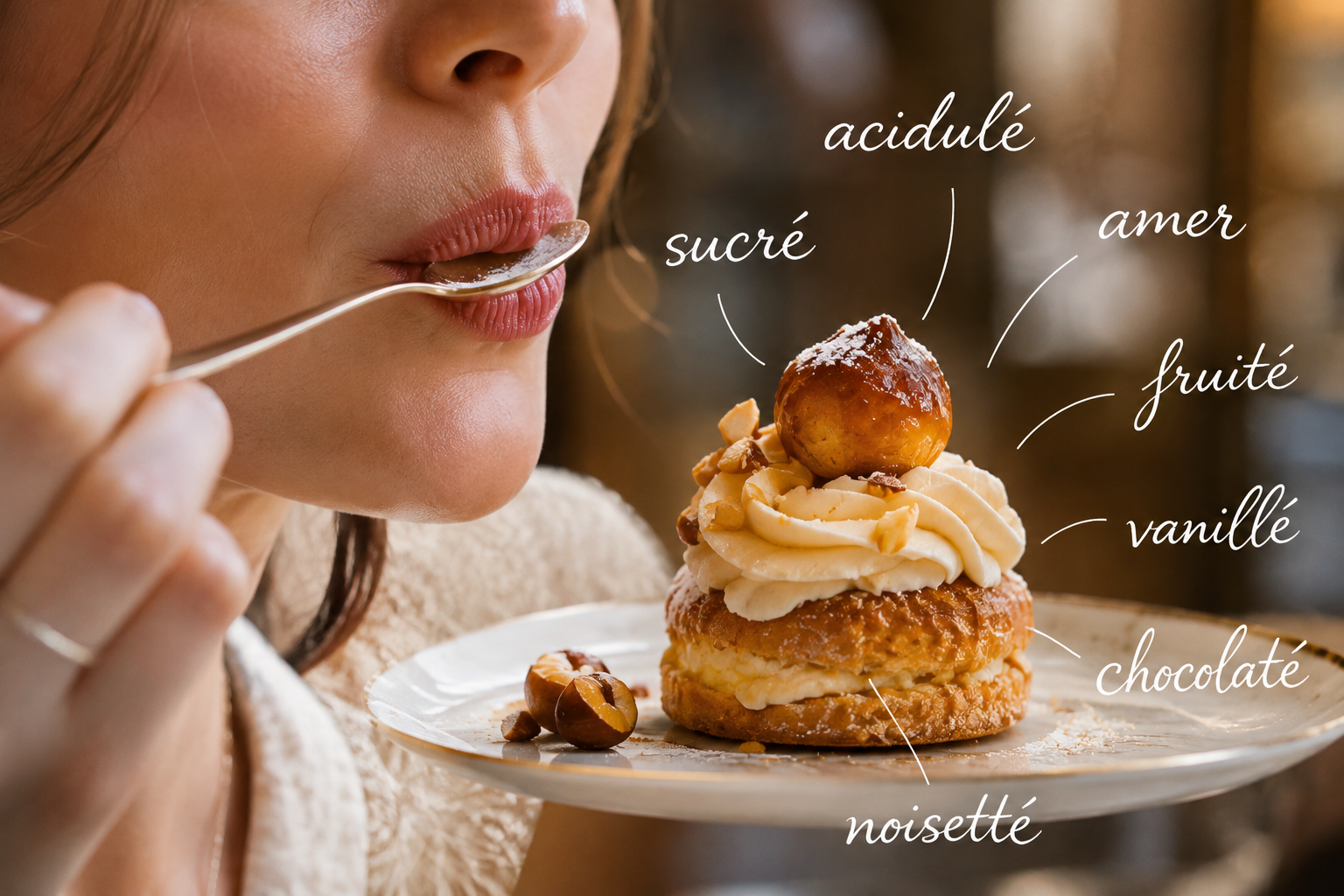
French people often describe food with surprisingly precise vocabulary. A dessert is not simply bon (good) or délicieux (delicious). Its texture, sweetness, acidity, and aromas all matter.
Describing Flavors — Les saveurs
Sucré(e) — Sweet
Peu sucré(e) — Not too sweet / low in sweetness
Acidulé(e) — Tangy
Amer / amère — Bitter
Fruité(e) — Fruity
Vanillé(e) — Vanilla-flavored
Chocolaté(e) — Chocolatey
Caramélisé(e) — Caramelized
Parfumé(e) — Aromatic / fragrant
Équilibré(e) — Well-balanced
Describing Textures — Les textures
Croustillant(e) — Crispy
Croquant(e) — Crunchy
Fondant(e) — Meltingly soft
Moelleux / moelleuse — Soft and moist
Crémeux / crémeuse — Creamy
Onctueux / onctueuse — Smooth and rich
Léger / légère — Light
Aérien / aérienne — Airy
Feuilleté(e) — Flaky / layered
Useful French Expressions to Describe a Dessert
Here are some expressions you might hear in a French pâtisserie:
Ce gâteau est très léger. — This cake is very light.
J'adore le contraste entre le croustillant et le fondant. — I love the contrast between the crispy and soft textures.
La crème est onctueuse et peu sucrée. — The cream is smooth and not too sweet.
Le citron apporte une touche acidulée. — The lemon adds a tangy note.
And if you really love a dessert, try these informal French expressions:
C'est une tuerie ! — It's unbelievably good!
C'est à tomber ! — It's to die for!
4. The New Face of French Pâtisserie: Less Sugar, More Flavor
IA generated
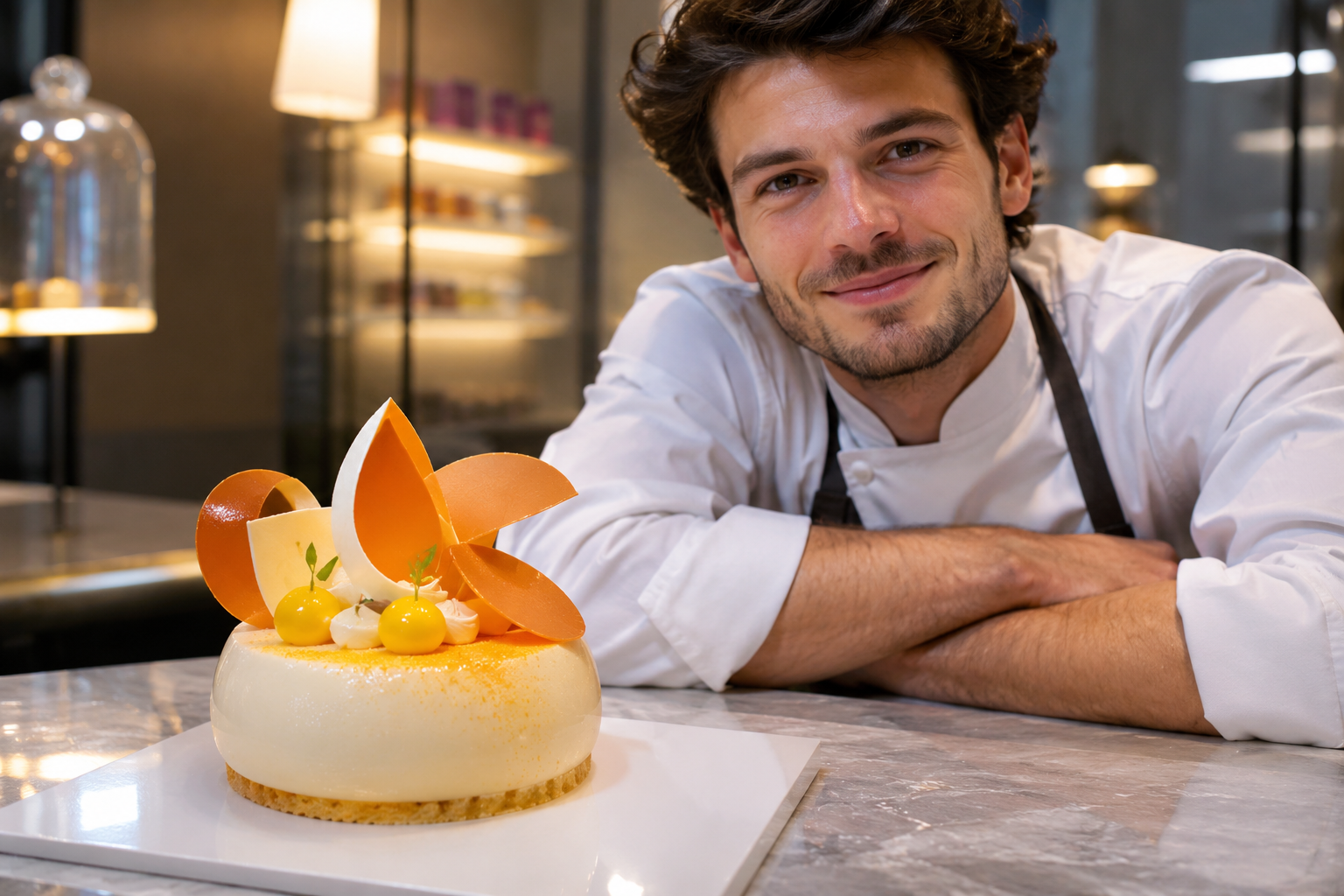
French pâtisserie is constantly evolving. While traditional recipes remain popular, contemporary pastry chefs are rethinking the balance between sweetness, flavor, texture, and presentation.
One major trend is reducing sugar without sacrificing pleasure.
Rather than relying on excessive sweetness, chefs increasingly emphasize the natural flavor of ingredients: the acidity of citrus fruits, the intensity of dark chocolate, the fragrance of vanilla, or the subtle bitterness of nuts.Seasonality has also become more important. Strawberries, apricots, figs, pears, and citrus fruits inspire desserts that change throughout the year.
Another trend is the rise of mono-product pastry shops, which specialize in a single type of pastry, such as éclairs, choux pastries, or macarons. By focusing on one product, pastry chefs can explore an impressive variety of flavors and creative interpretations.
Meet Some of France's Star Pastry Chefs
Pierre Hermé, often nicknamed the Picasso of Pastry, is famous for his bold flavor combinations. His iconic Ispahan brings together rose, raspberry, and lychee in an elegant balance of floral and fruity notes.
Cédric Grolet has become internationally famous for his spectacular trompe-l'œil creations. His desserts look astonishingly like real fruits, but reveal intricate layers of creams, fillings, and textures when cut open.
Claire Heitzler is known for her ingredient-focused approach, emphasizing seasonal produce, precise flavors, and a thoughtful balance of sweetness.
Christophe Michalak has helped make contemporary French pâtisserie more playful and approachable, reinventing familiar desserts with modern techniques and creative presentations.
5. The Bûche de Noël: France's Most Iconic Christmas Dessert
What do French families traditionally eat for dessert on Christmas Eve?
For many, the answer is simple: la bûche de Noël, or Christmas Yule log.
Its origins are connected to an older European tradition of burning a large log in the fireplace during the Christmas season, symbolizing warmth, light, and good fortune.
The edible version appeared in the nineteenth century, although its exact inventor remains disputed.
Traditionally, a bûche de Noël is a rolled sponge cake filled and covered with buttercream, often chocolate or coffee flavored. Its decoration resembles a wooden log, sometimes complete with chocolate bark, powdered sugar, or miniature mushrooms.
Today, however, Christmas has become one of the most exciting moments in the French pastry calendar.
When Christmas Desserts Become Works of Art
IA generated
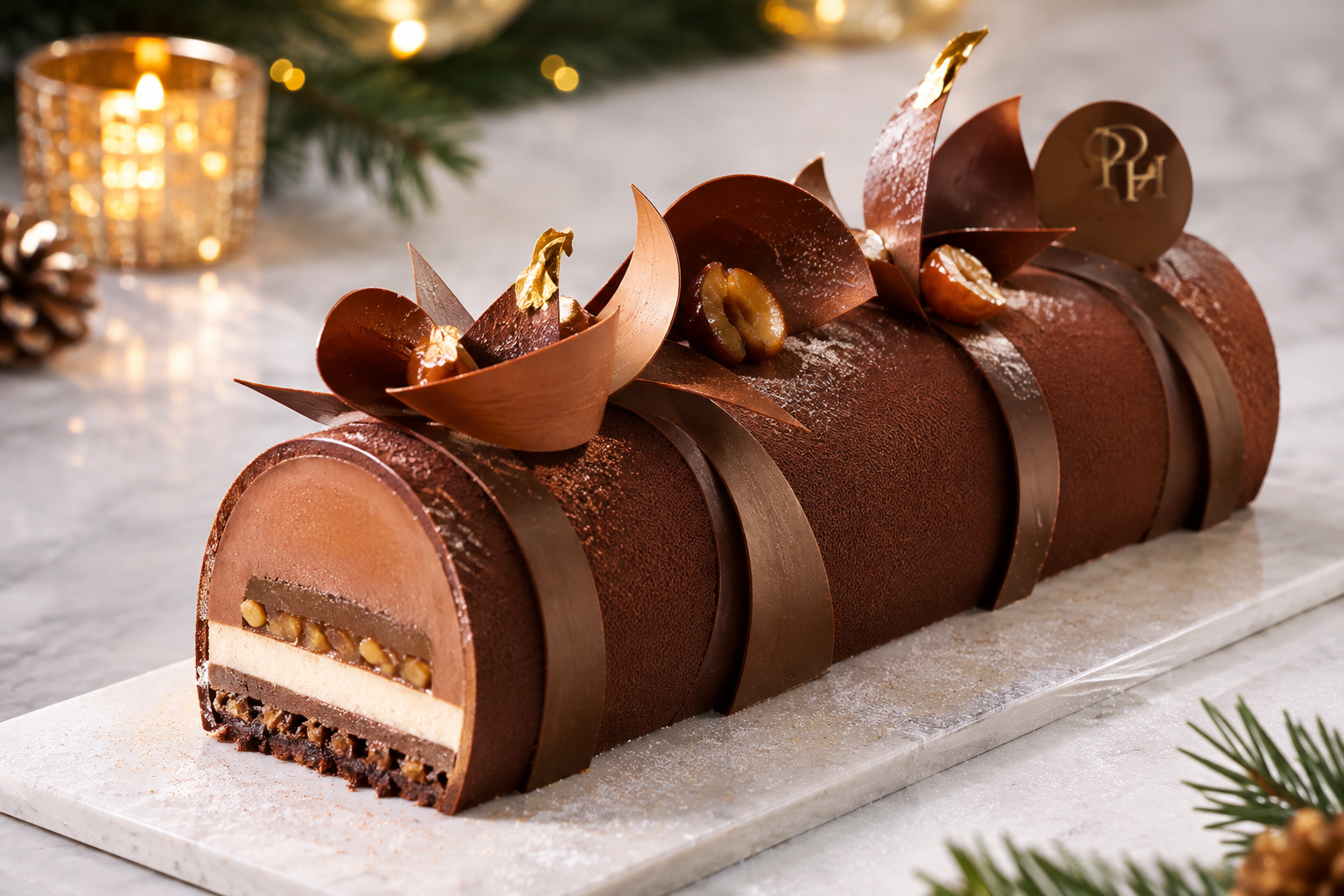
Every year, leading pastry chefs and luxury Parisian hotels unveil increasingly imaginative Christmas creations.
Some resemble sculptures, architectural structures, precious objects, or miniature winter landscapes. Chocolate may be molded into delicate geometric shapes, while the interior combines sophisticated layers of mousse, fruit, praline, sponge cake, and crunchy elements. These creations can take weeks or even months to develop.
For pastry chefs, the Christmas season is an opportunity to demonstrate both technical mastery and artistic imagination. And for French people, choosing a bûche has become a much-anticipated holiday ritual !
Essential Christmas Pastry Vocabulary
Une bûche de Noël — Christmas Yule log cake
Un biscuit roulé — Rolled sponge cake
Une mousse au chocolat — Chocolate mousse
Un glaçage — Glaze / icing
Un insert — An interior filling layer
Une décoration en chocolat — Chocolate decoration
Une édition limitée — Limited edition
Une commande — An order
Commander à l'avance — To order in advance
A useful tip if you are spending Christmas in Paris: popular Christmas bûches from well-known pastry shops often need to be ordered in advance.
6. At the Pâtisserie: How to Order Like a Local
IA generated
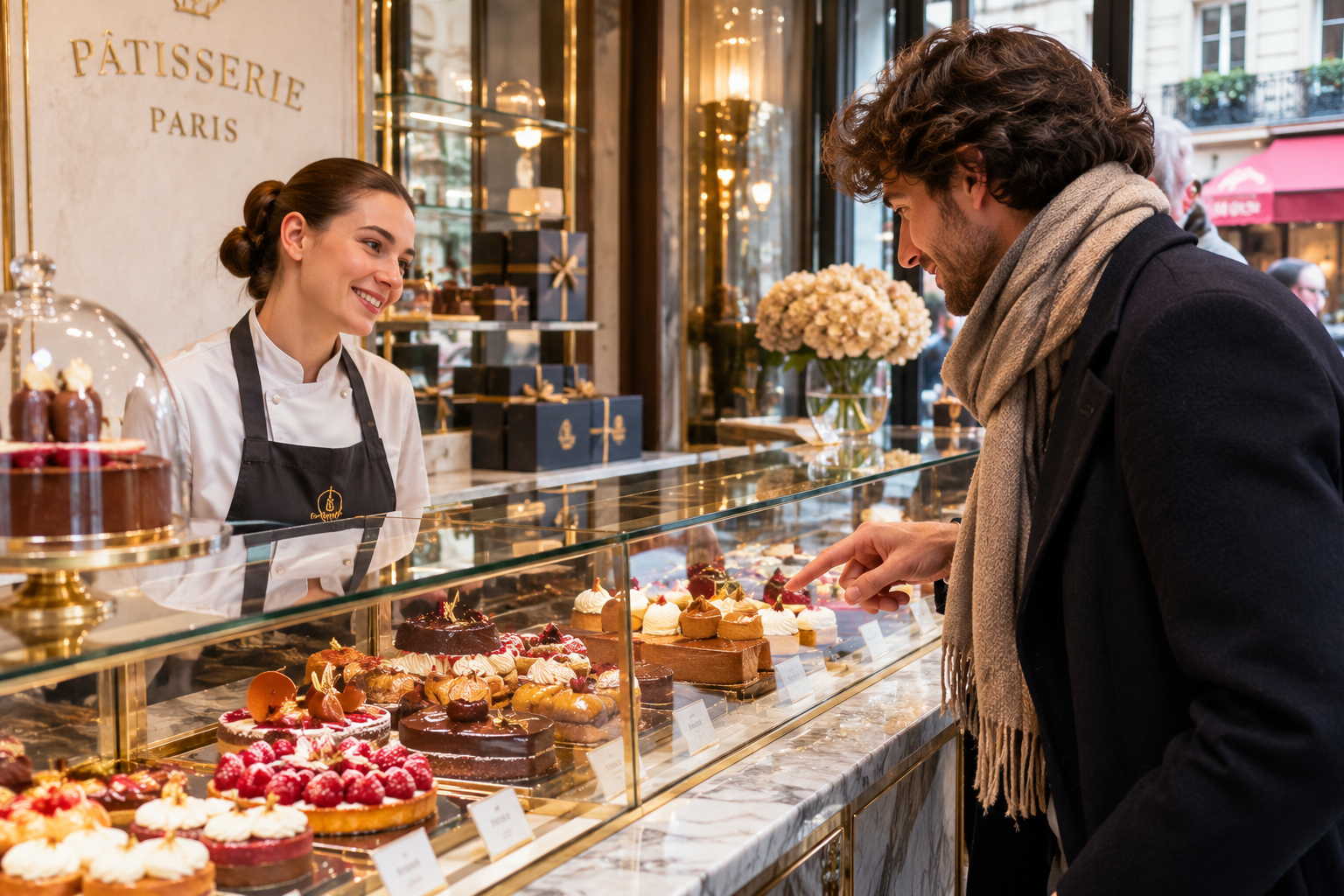
Knowing French pastry vocabulary is especially useful when visiting a bakery or pastry shop.
But first, what's the difference between une boulangerie and une pâtisserie?
A boulangerie specializes in bread and baked goods such as baguettes, croissants, and pains au chocolat. Many also sell cakes and desserts.
A pâtisserie specializes in sweet creations such as éclairs, tarts, macarons, and elaborate cakes.
Some establishments combine both activities and display the sign Boulangerie-Pâtisserie.
Here are a few useful phrases for your next visit.
Je voudrais deux éclairs au chocolat, s'il vous plaît. — I'd like two chocolate éclairs, please.
Qu'est-ce que vous me conseillez ? — What would you recommend?
C'est très sucré ? — Is it very sweet?
Qu'est-ce qu'il y a à l'intérieur ? — What's inside?
Je préfère les desserts fruités. — I prefer fruit-based desserts.
C'est pour offrir. — It's a gift.
Je peux commander une bûche pour Noël ? — Can I order a Yule log for Christmas?
Je vais prendre celui-ci. — I'll take this one.
7. Our Favorite Pâtisseries in Paris: 7 Must-Visit Addresses
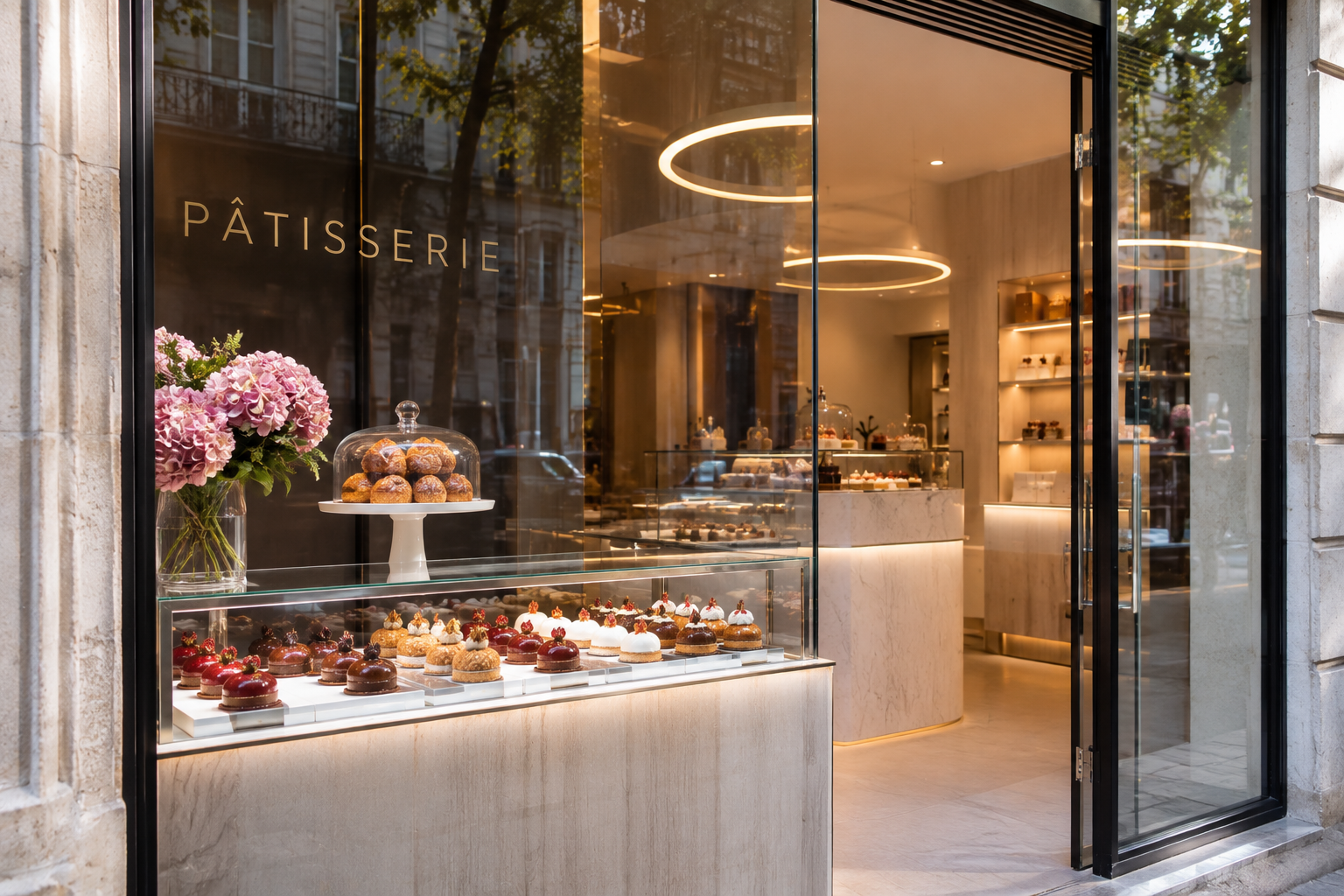
Paris is home to some of the world's most talented pastry chefs. From historic pastry shops to innovative contemporary creations, here are seven of our favorite places to discover the art of French pâtisserie.
1. Stohrer — 2nd arrondissement
51 rue Montorgueil
Founded in 1730, Stohrer is Paris's oldest pastry shop. Its magnificent historic interior is worth a visit in itself. Don't miss the famous baba au rhum, a dessert closely associated with its founder, Nicolas Stohrer.
2. Pierre Hermé — 6th arrondissement
72 rue Bonaparte
A must for macaron lovers! Pierre Hermé is celebrated for his imaginative flavor combinations, particularly his iconic Ispahan, featuring rose, raspberry, and lychee.
3. Cédric Grolet — 2nd arrondissement
35 avenue de l'Opéra
Discover some of Paris's most spectacular contemporary pastries, including Grolet's famous fruit-shaped trompe-l'œil desserts. A fascinating combination of technical precision and artistic creativity.
4. Des Gâteaux et du Pain – Claire Damon — 7th arrondissement
89 rue du Bac
Claire Damon's elegant pastries celebrate seasonal fruits, carefully selected ingredients, and beautifully balanced flavors. An excellent address for discovering a more ingredient-focused approach to French pastry.
5. Yann Couvreur — 10th arrondissement
137 avenue Parmentier
Known for his refined yet approachable creations, Yann Couvreur offers beautiful interpretations of French classics. His hazelnut Paris-Brest is particularly tempting.
6. La Pâtisserie Cyril Lignac — 11th arrondissement
24 rue Paul Bert
Chef Cyril Lignac brings a contemporary touch to traditional French desserts. Expect delicious pastries, chocolate creations, and beautifully executed classics.
7. Maison Aleph — 4th arrondissement
20 rue de la Verrerie
Pastry and Chocolate tour with French à La Carte
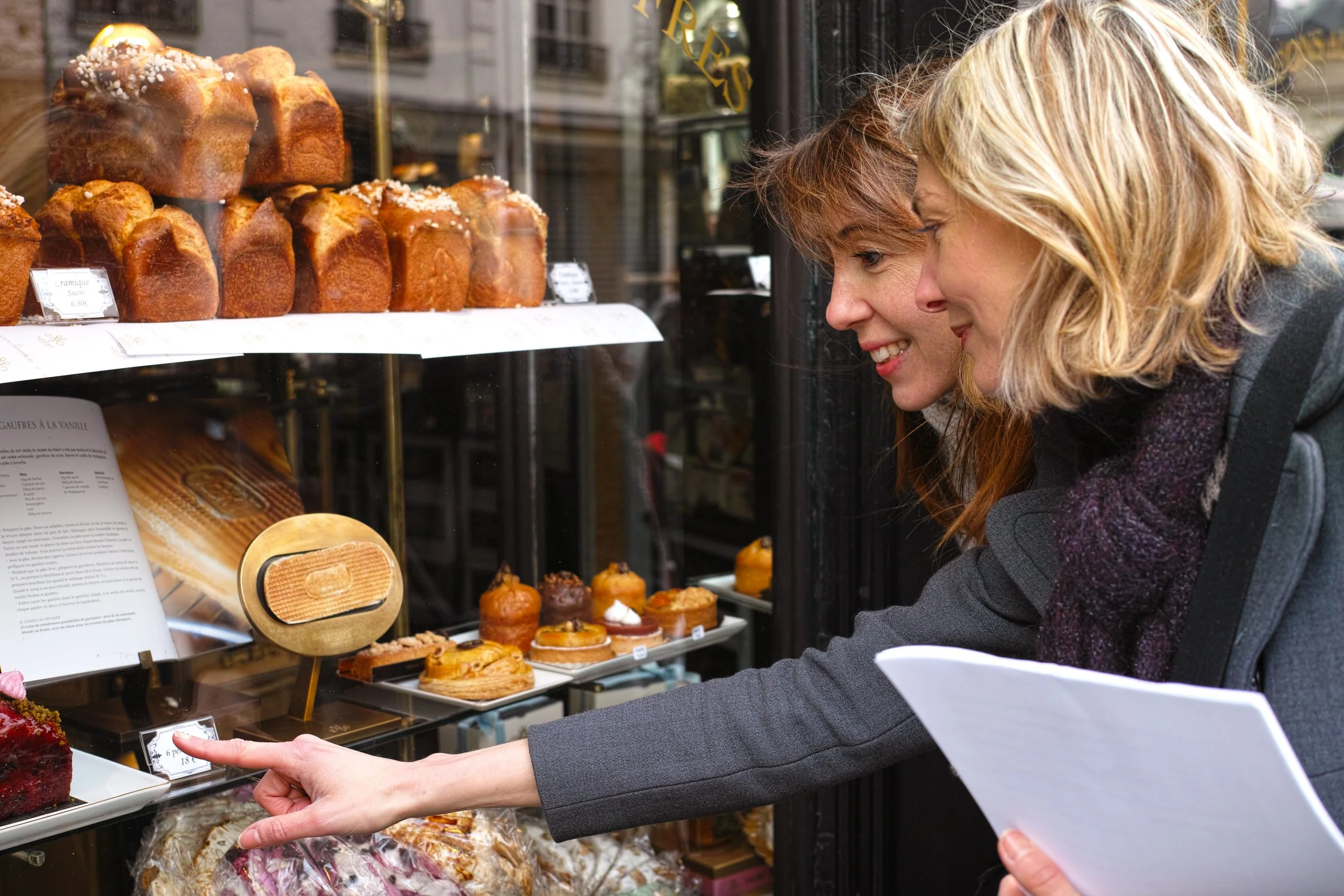
Pastries and chocolate tour - French à La Carte
If this article has inspired you to discover French pâtisserie, indulge in delicious pastries, and practice your French, why not experience it all on our Pastry and Chocolate Walking Tour in Saint-Germain-des-Prés or Le Marais?
Stroll through charming Parisian streets, discover some of the city's finest pastry and chocolate shops, enjoy delicious tastings, and practice your French in real-life situations. It's a delicious way to explore Paris beyond the usual tourist attractions!
After all, learning the difference between croustillant, fondant, and moelleux is much easier when you can actually taste it!